PC · Unity · Cozy Farming & Crafting
You return to a home planet with only one glowing tree left. Bring your scattered friends home, and every rescue gives you a new way to rebuild.
Project Info
Genre: Cozy Farming / Crafting / Light Management
Platform: PC
Engine: Unity 6 (2D URP)
Language: English / Chinese
Team Size: 2
Status: Ongoing, playable demo available
Roles
Gao Anqi — Systems & Content Design, Art
- Designed the core loop, from signal to rescue to unlock
- Designed the rescue and spaceship crafting pipeline
- Designed farming, crater drops and resource processing
- Balanced resource flow, trading and daily refreshes
- Built data tables for items, plants and spaceship parts
- Planned companion-driven progression for the demo
- Created all art, UI and alien customization
Teammate — Programming
- Handled all programming and technical implementation
- Built the pipeline from data tables to in-game content
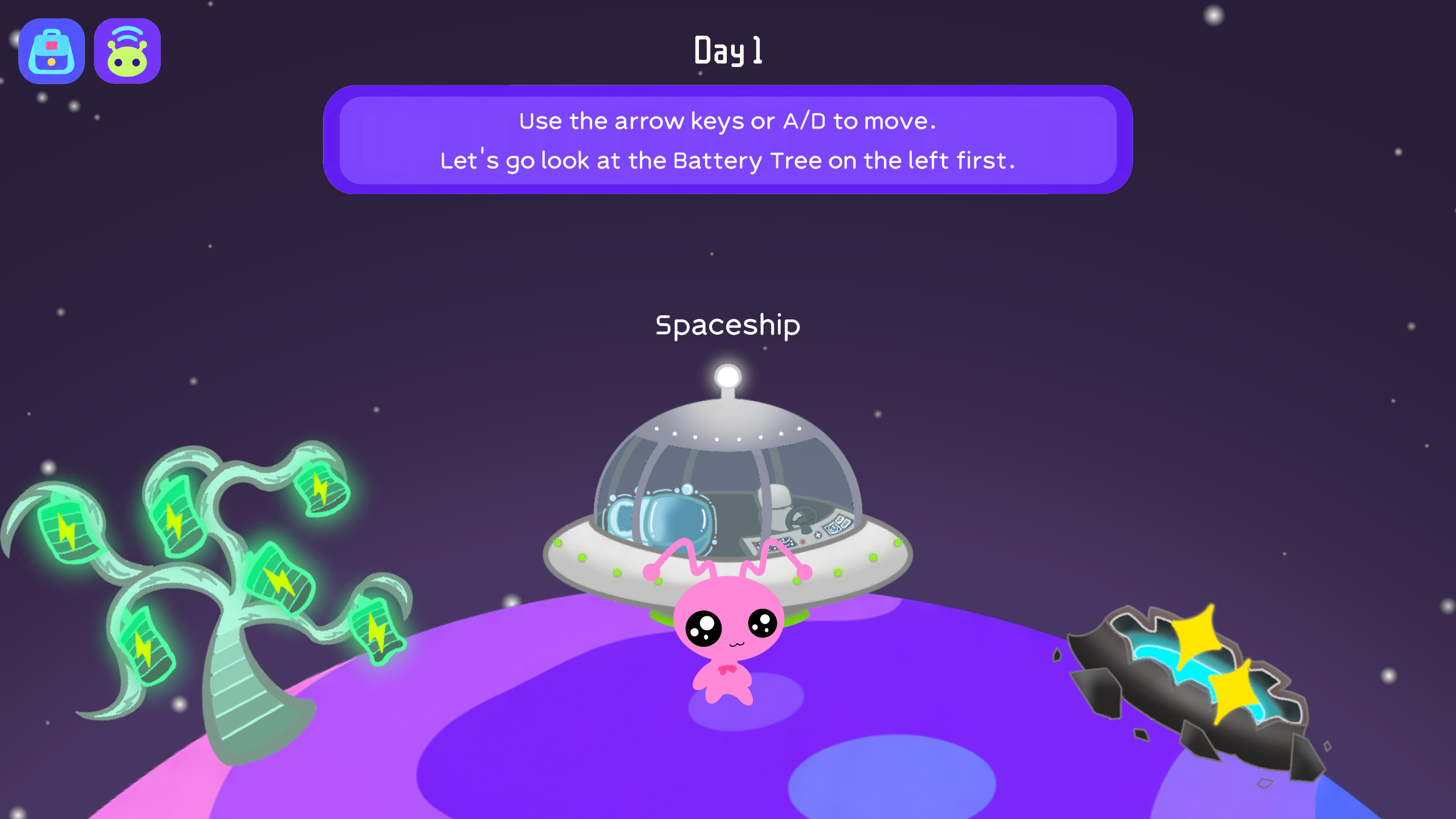
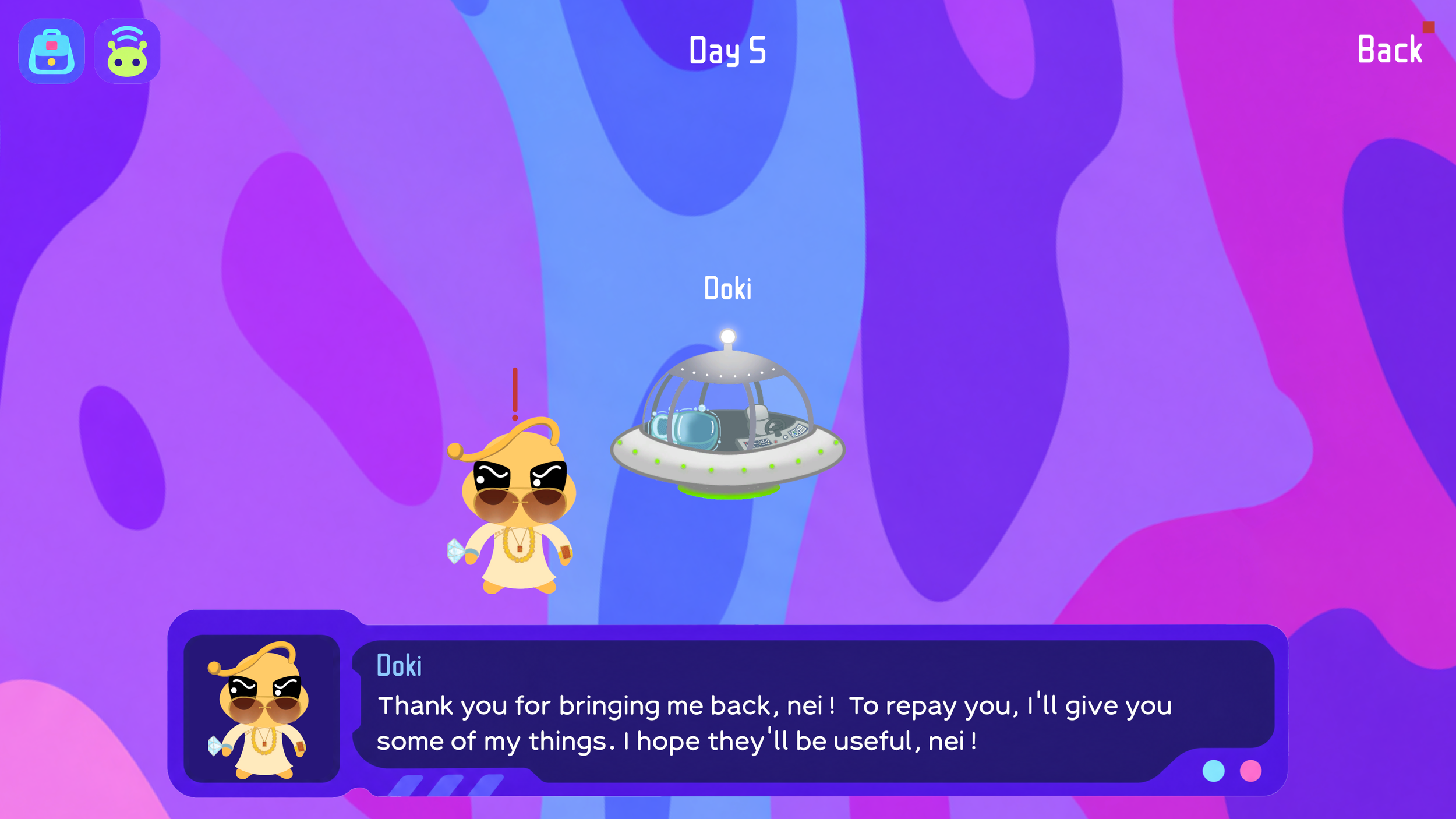
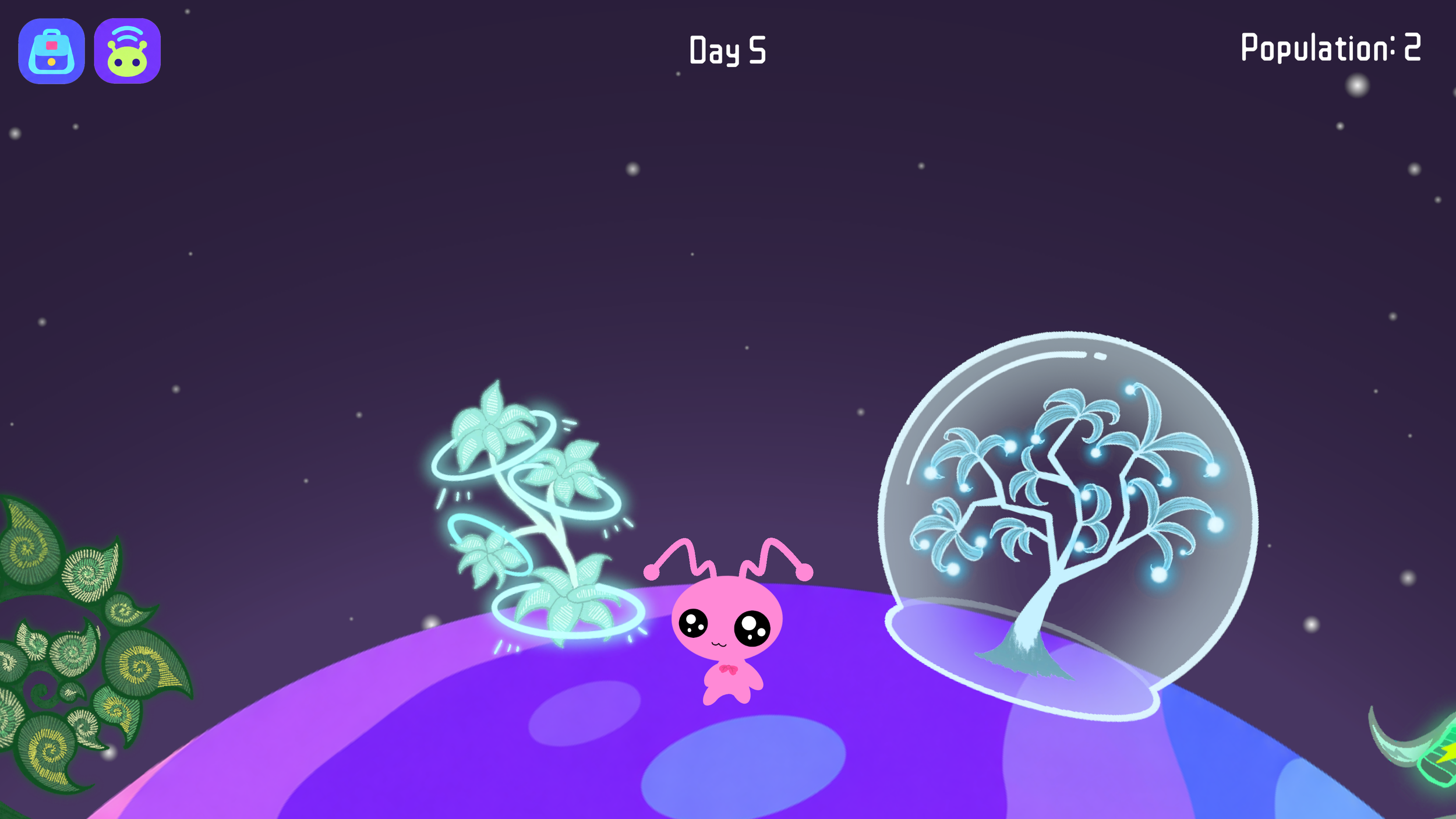
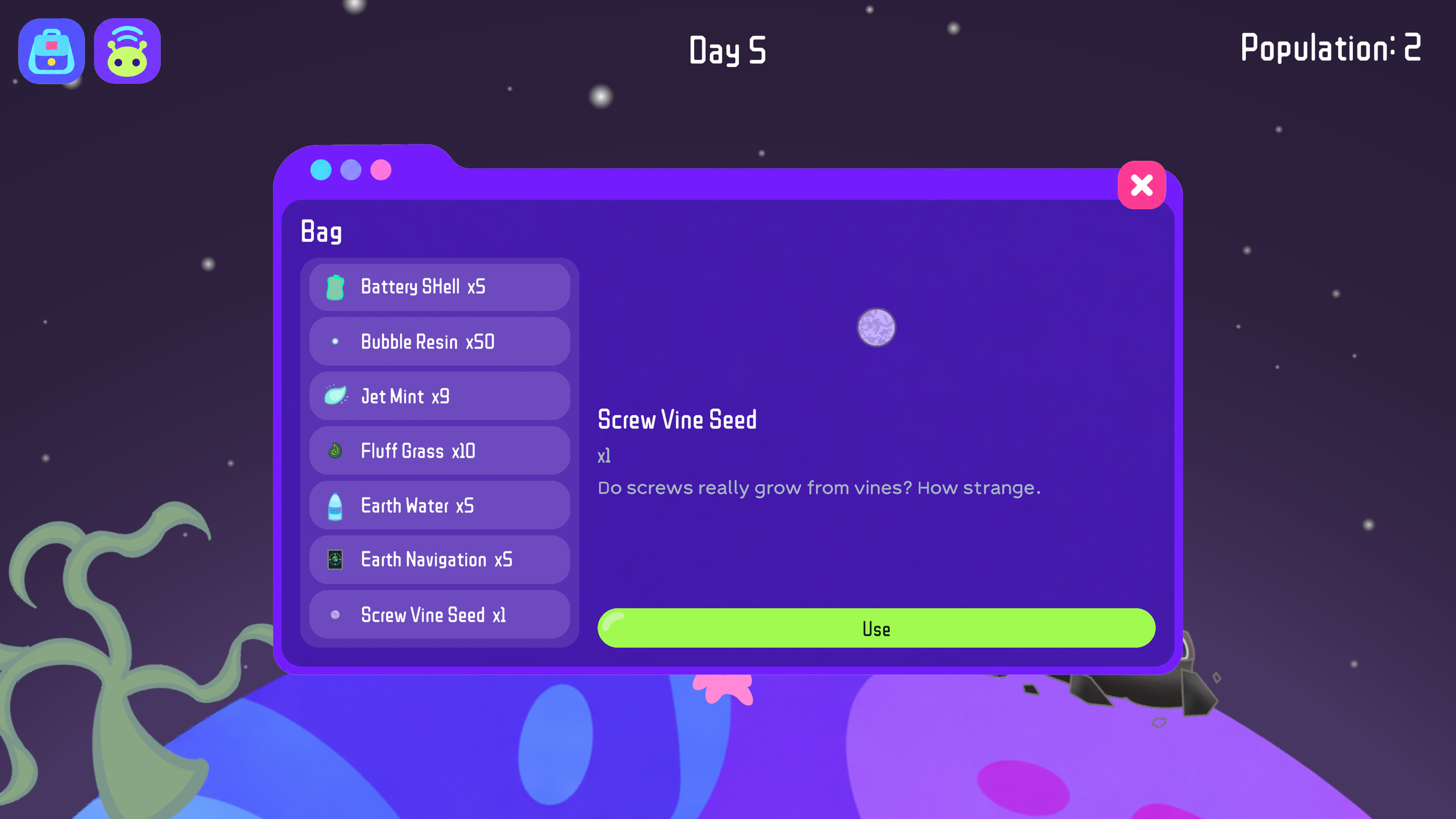
Concept
Bringing your companions home is both the goal and the reward.
In Back Homu!, players discover each companion's needs, design and build a ship for their journey home, and welcome them into an increasingly lively community.
Every homecoming changes what players can do next: returning companions bring new materials, blueprints, everyday assistance, or clues to their home planet's past, making future journeys possible. This creates a self-expanding loop: Bring companions home → Gain new abilities and resources → Upgrade the Signal Spire → Rescue the companion. With every rescue, the world grows richer and livelier.

This page explores the level and systems design behind that loop: how Signal Spire upgrades pace exploration, how resource costs and trading shape the preparation process, and how companion unlocks gradually introduce new mechanics—bringing more life to the growing homeworld.
This is an ongoing project; the following describes the features currently available in the demo.
-
Rebuilding means more than restoring buildings and gathering resources. It means turning an empty planet into a home where people live and care for one another. Progress is reflected in changes to the community and its surroundings—not just numbers.
-
Building a spaceship is an act of understanding and care. Players learn about each fellow Homu’s needs and design a ship around them. They are creating more than transportation: they are giving someone a comfortable, reassuring way home.
-
Sci-fi crafting becomes intuitive, familiar, and approachable. By grounding futuristic technology in everyday activities, the game lets players enjoy designing and making without needing engineering knowledge.
-
Players set their own pace. They can focus on moving forward or taking time to harvest resources and refine their designs, without worrying about losing progress when they step away or slow down.
Design Pillars
Two Nested Loops
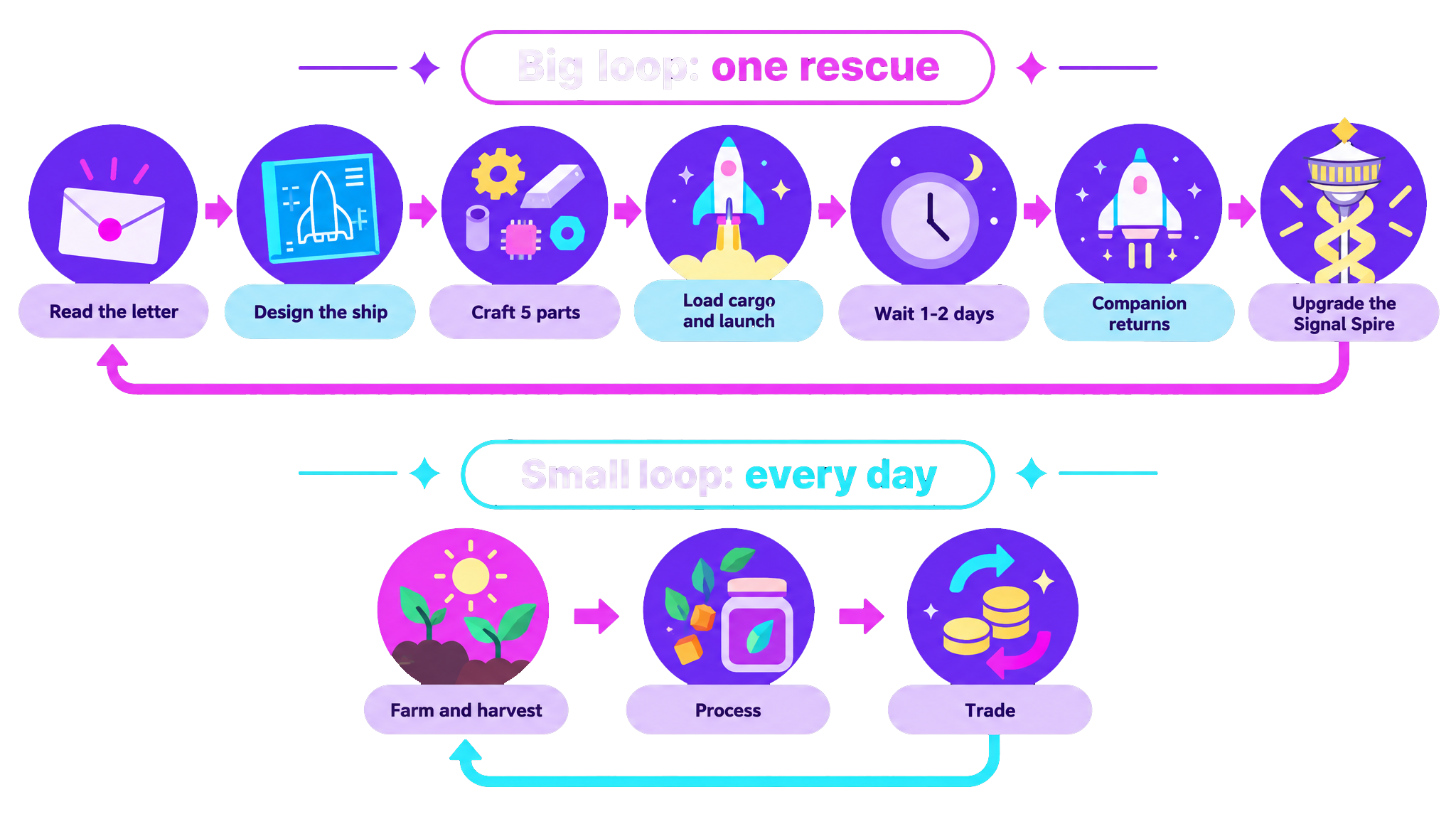
The big loop is one rescue; The small loop is one day.
The small loop produces materials and resources, and the big loop brings back new abilities.
Small loop → big loop:
Daily output becomes the materials for crafting parts, the cargo for launches, and the materials for upgrading the Signal Spire.
Big loop → small loop:
Returning companions bring new recipes, new materials, new trade entries and new features, so the daily loop gets richer over time.
Resource Web
Resources come in three types, and companions connect them into a web that keeps growing.
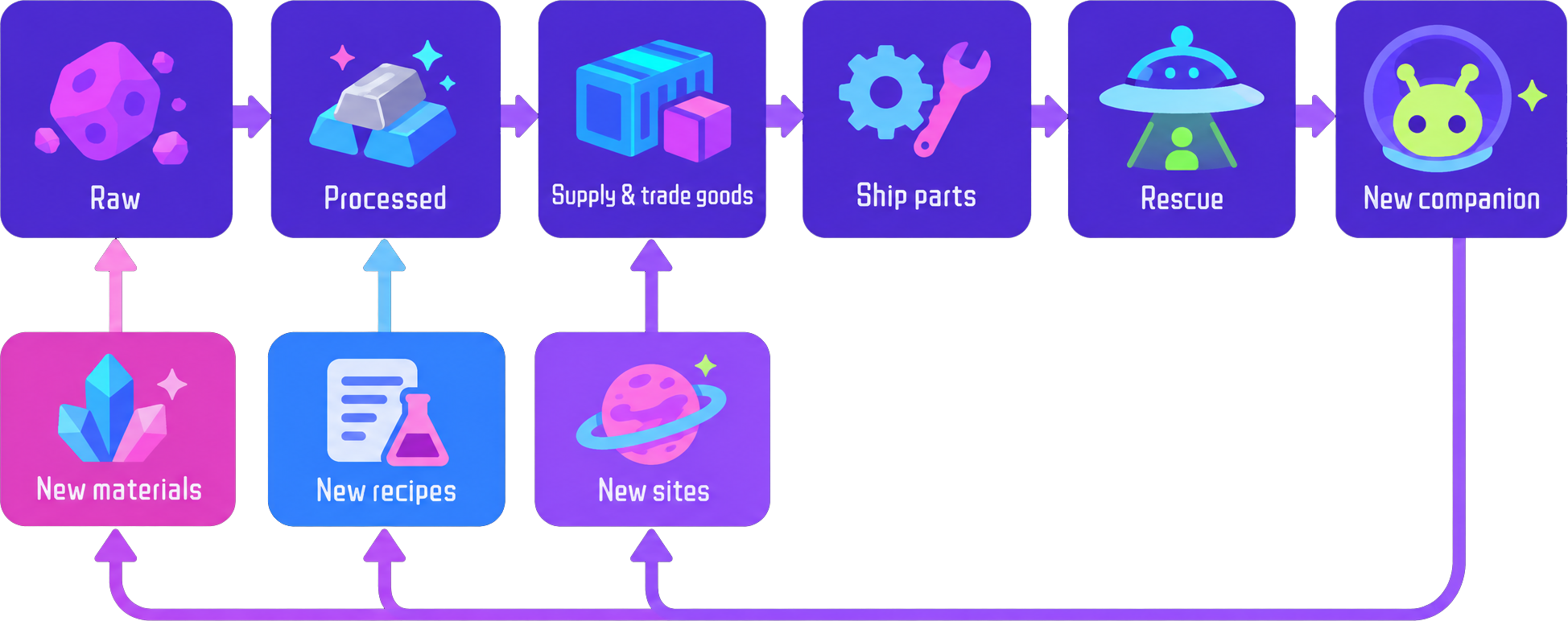
Every companion who returns expands the web with new recipes and new materials. These are exactly what the next rescue needs, so players naturally follow the companions deeper into the game.
Signal Spire Gating
The Signal Spire’s level determines which companions the player can contact, while the companions from each tier provide the “keys” to unlocking the next.
The Signal Spire starts at Lv0, and the demo includes three progression gates: upgrades to Lv1, Lv2, and Lv3. Each upgrade unlocks new companions to contact. The final companion, Master Lee, becomes available only after all five previous companions have returned home and the Signal Spire has reached Lv3.
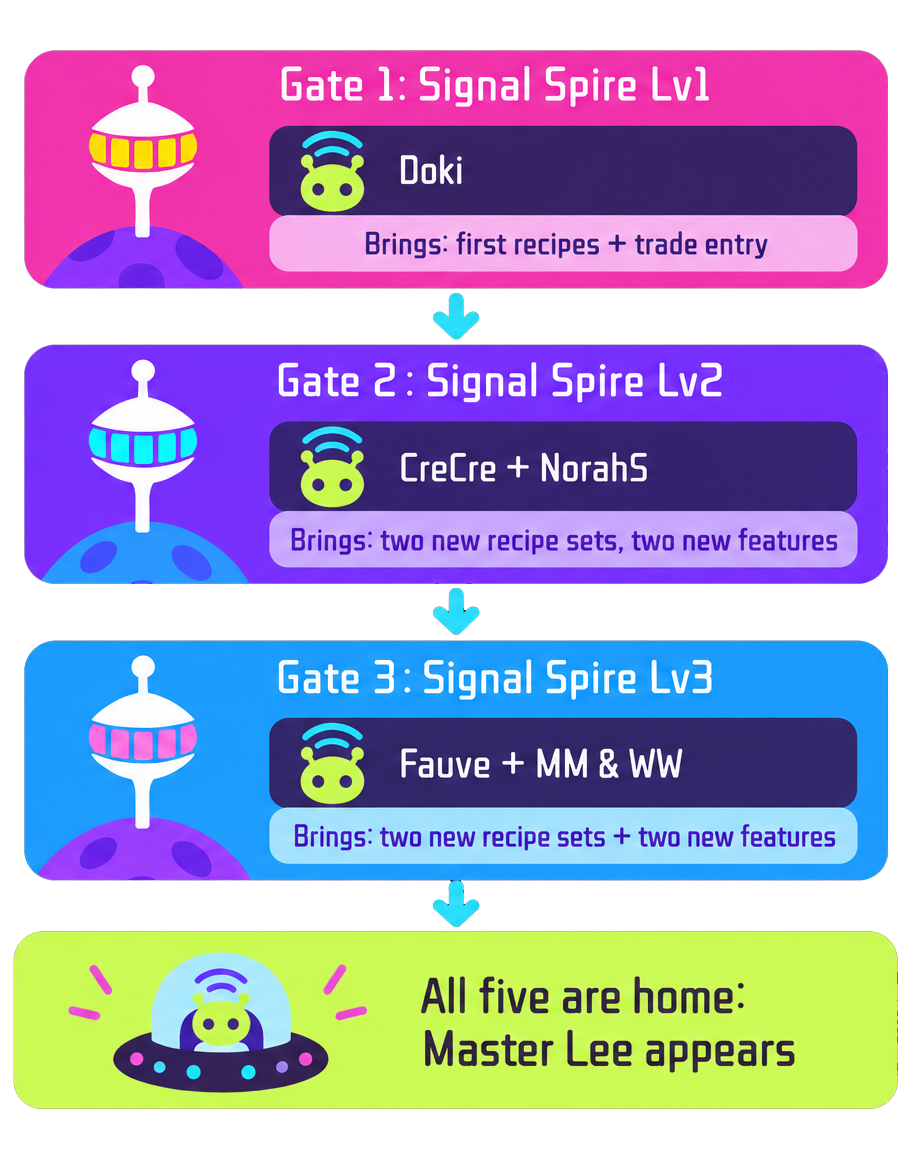
This is an ongoing project; the current demo ends here.
Different Paths, One Destination
Companions within the same tier can be rescued in any order. Their rescue requirements do not depend on one another.
Each upgrade requires materials crafted using recipes provided by every companion in the previous tier.
For example, the materials for Gate 3 require recipes from both CreCre and NorahS. Players must therefore bring all currently available companions home before upgrading the Signal Spire and reaching the next group.
The Trade Station upgrades when NorahS returns in the second wave. Trading with a specific planet also requires bringing home the companion stationed there. Choosing whom to rescue first changes the order of progression, but not the eventual outcome.
Value & Progression
One shared value scale measures the growth of every level,
so progression can be calculated and designed.
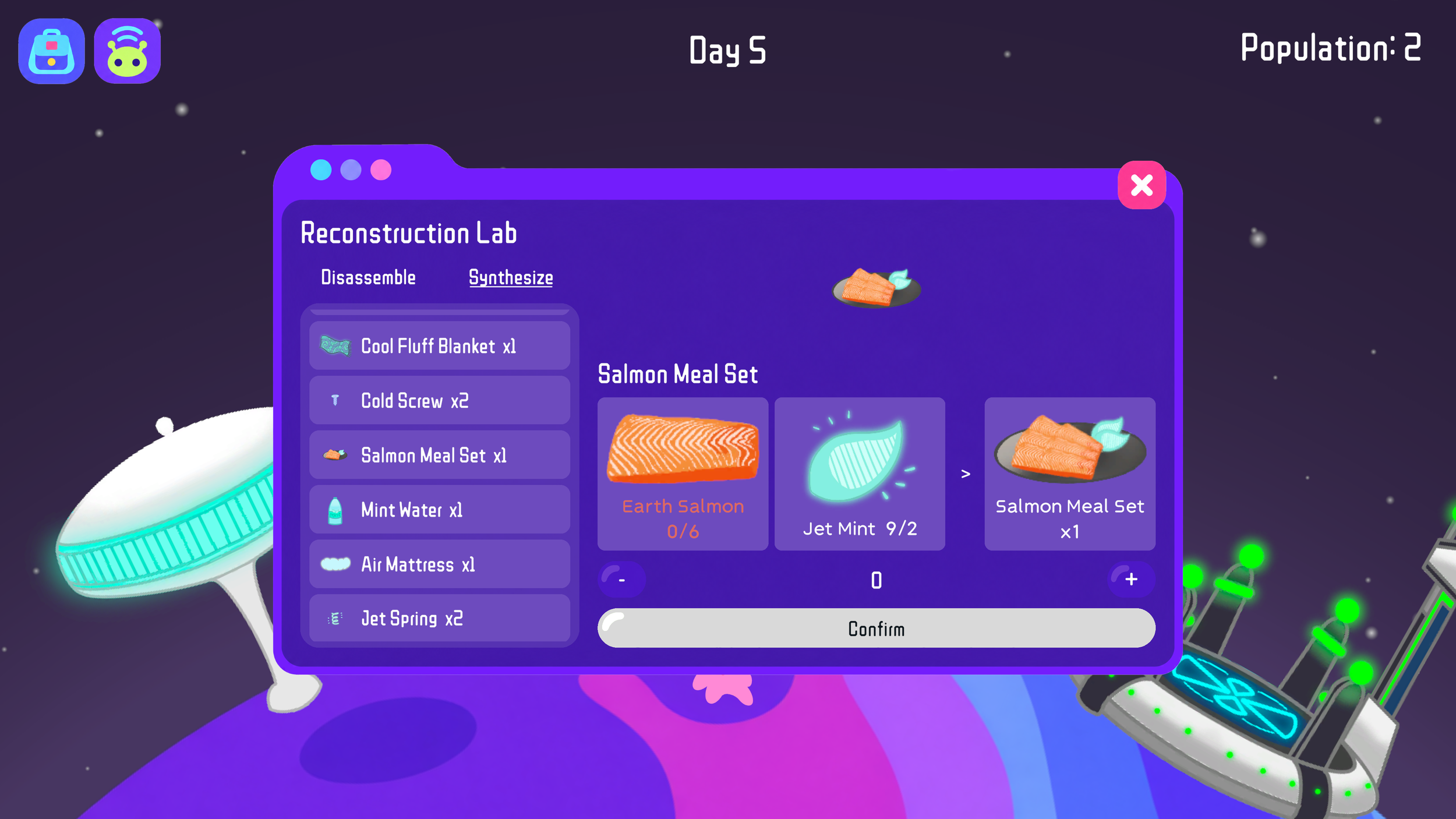
Value is based on One battery = 1. Deconstruction and reconstruction keep value equal to the sum of the inputs, and trade is priced as a roughly equal exchange.
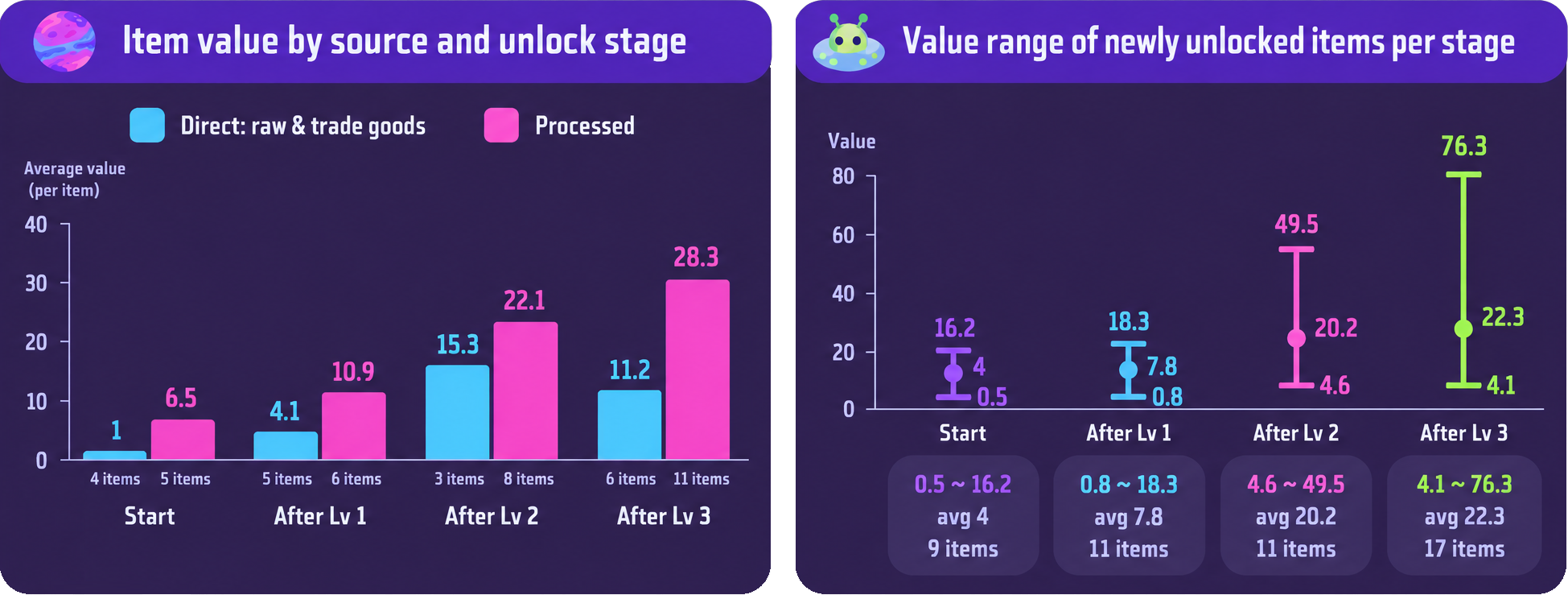
As players progress through each level, the overall value of items increases, but each stage still has a range that goes from low to high; therefore, players will always go through a process of crafting high-value items from low-value ones using new recipes.
Cost along the progression
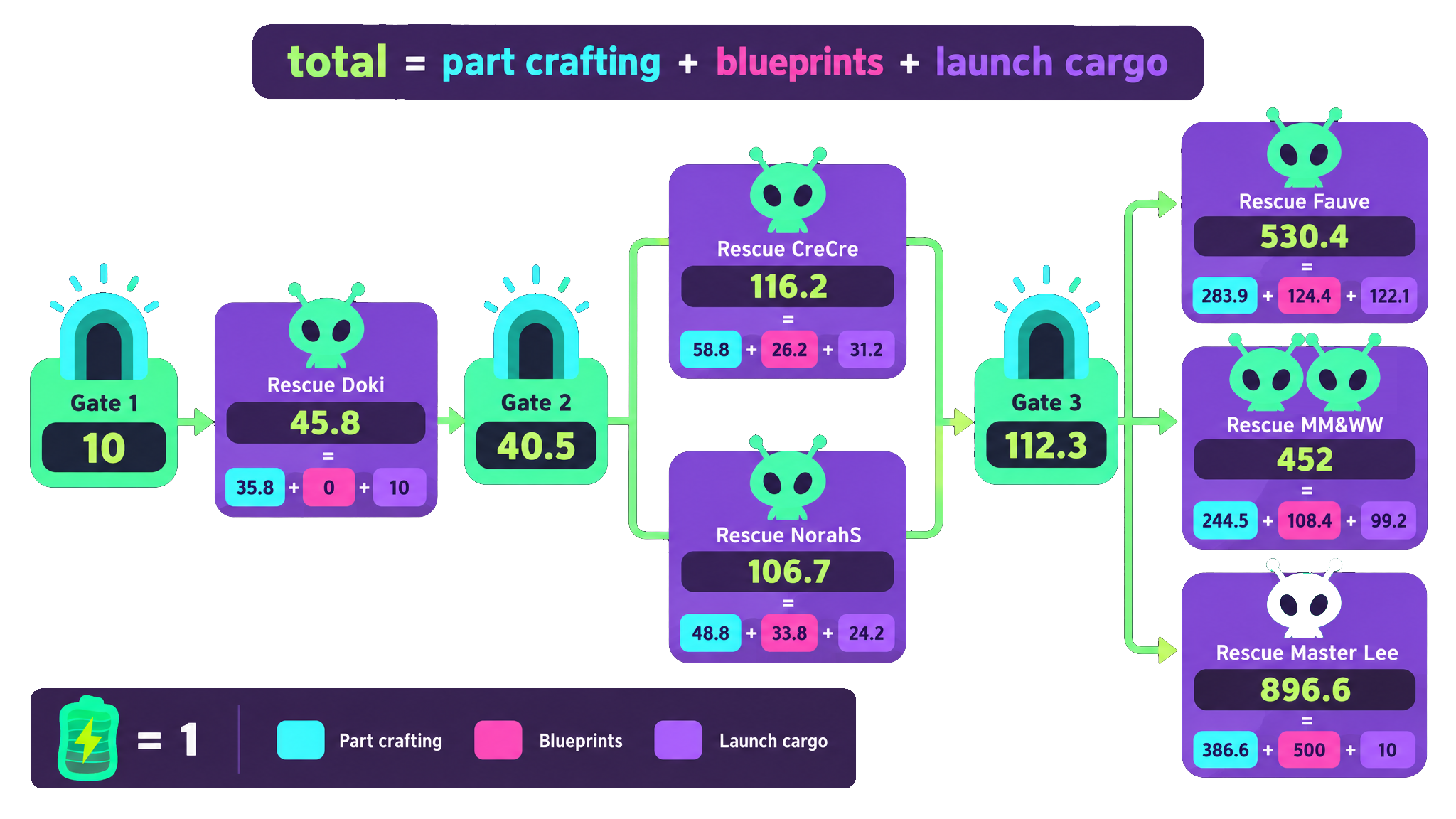
Average cost per level:
Level 1 is 46, Level 2 is 111 (2.4× Level 1), Level 3 is 491 (4.4× Level 2), and Master Lee is 897 (1.8× Level 3). Level 3 is the biggest jump. After all the rescues in Level 2, players can buy the high-speed clock (which can provide double harvest), and together with Doki's auto-harvest, the output keeps up.
Letters as Specs
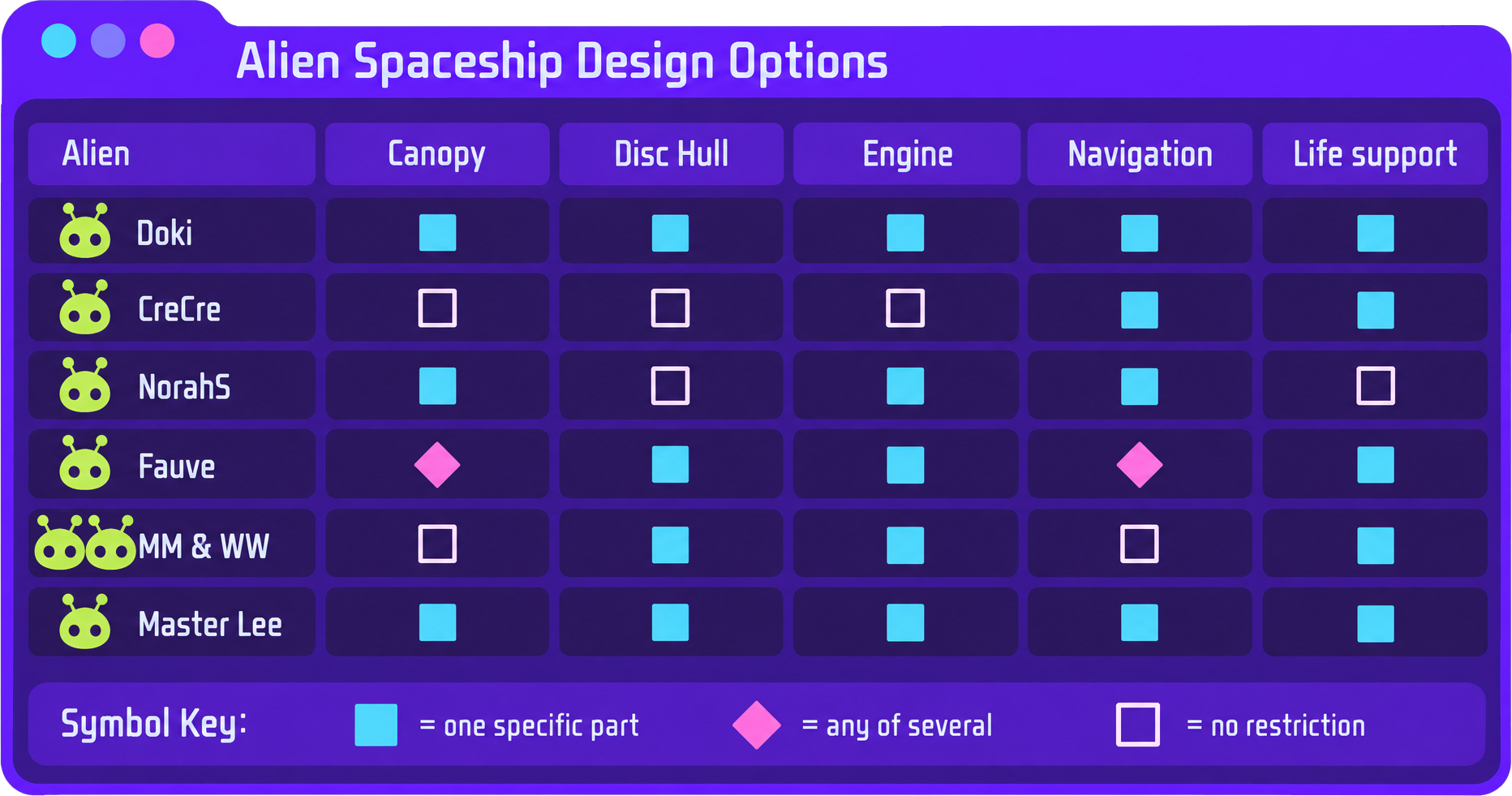
The spaceship's requirements are written in a natural-language letter, and the player has to read the constraints out of it.
Example
Each of the 5 slots has one of three constraint types:
one specific part, any of several, or no restriction.
Every companion's letter has a different difficulty, and the difficulty rises step by step.
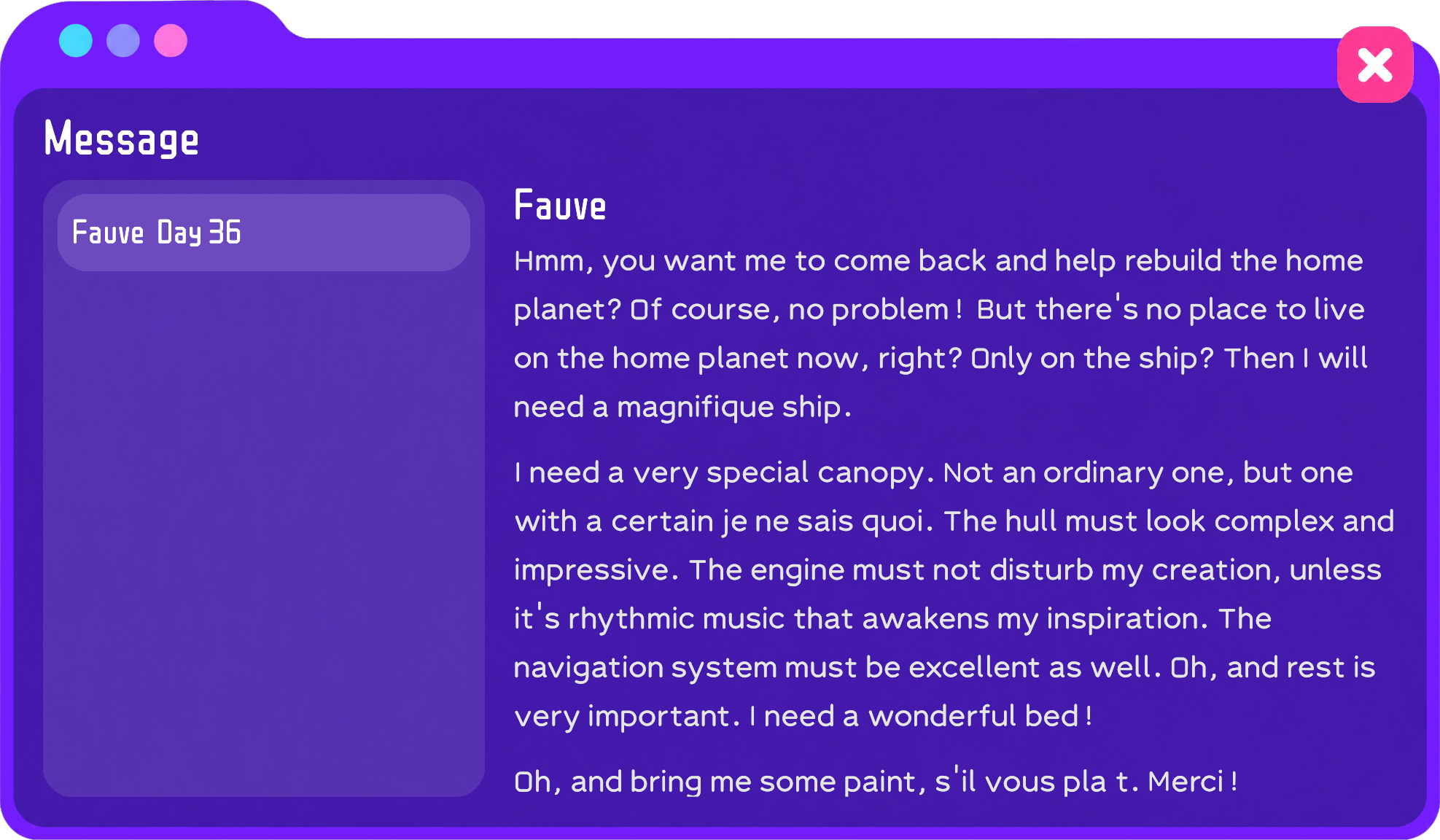
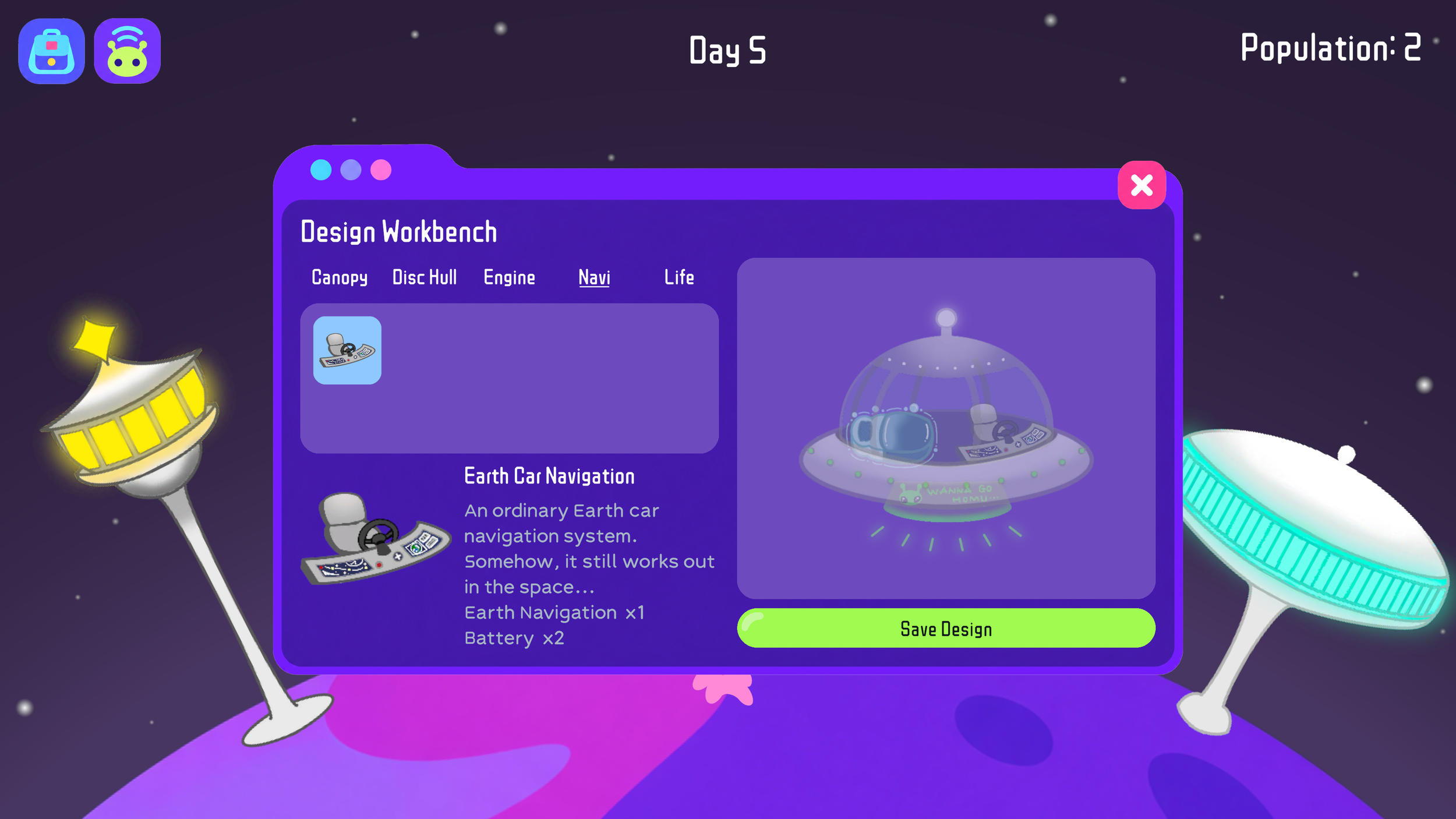
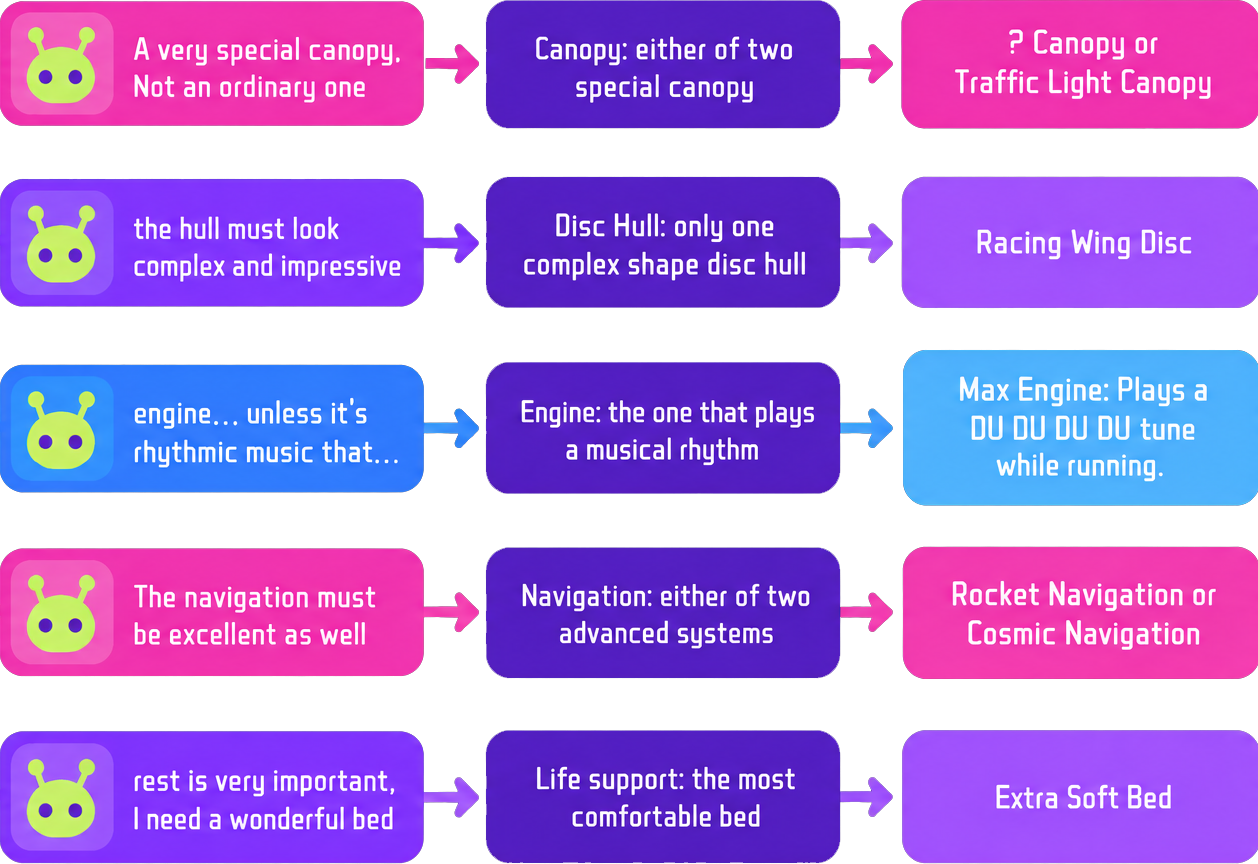
This is the message from Favue. Based on the description in the message, we can determine what components to use in designing the spaceship.
What Companions Bring Back
Features are not decoration. Each one answers a specific problem.
-
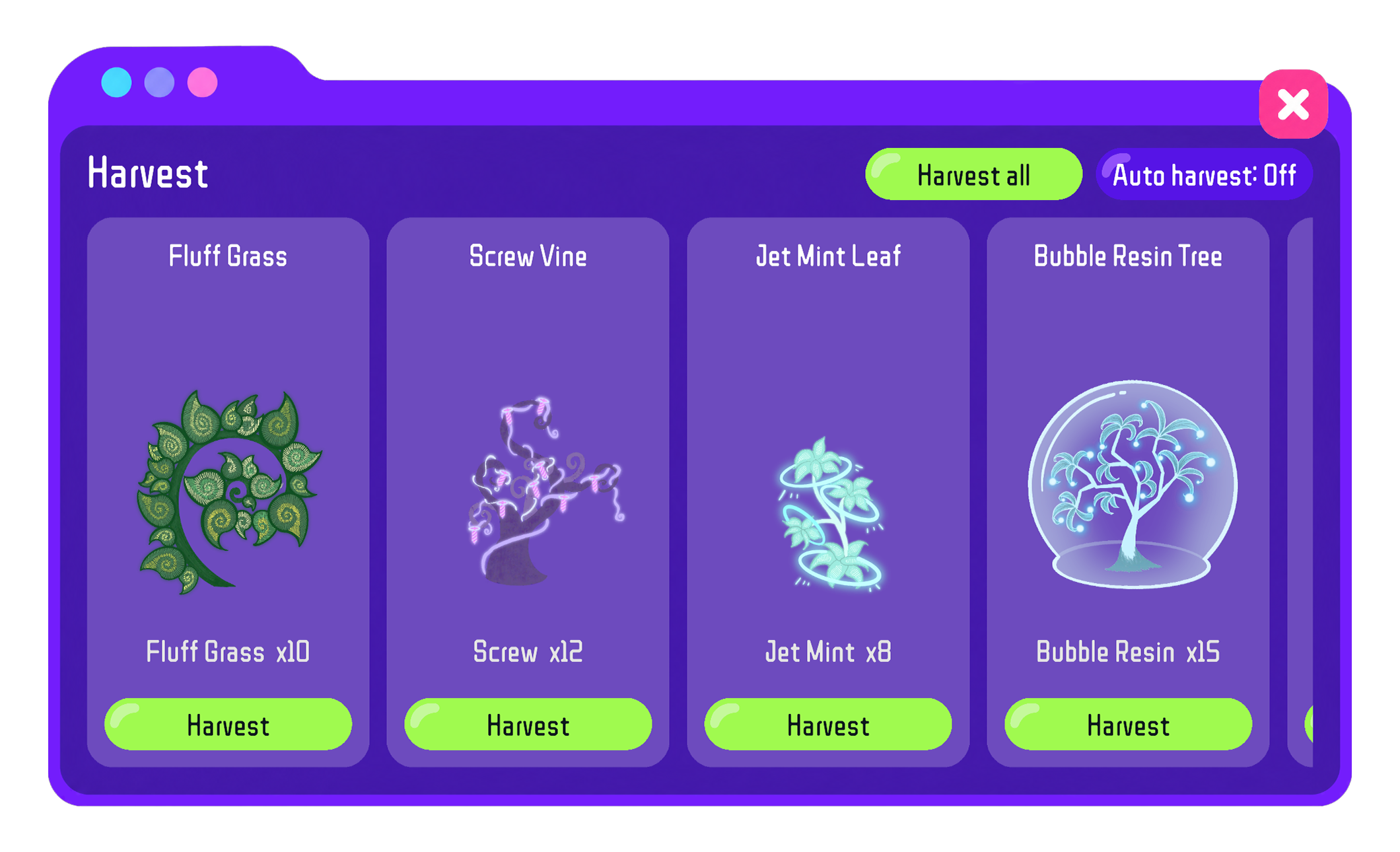
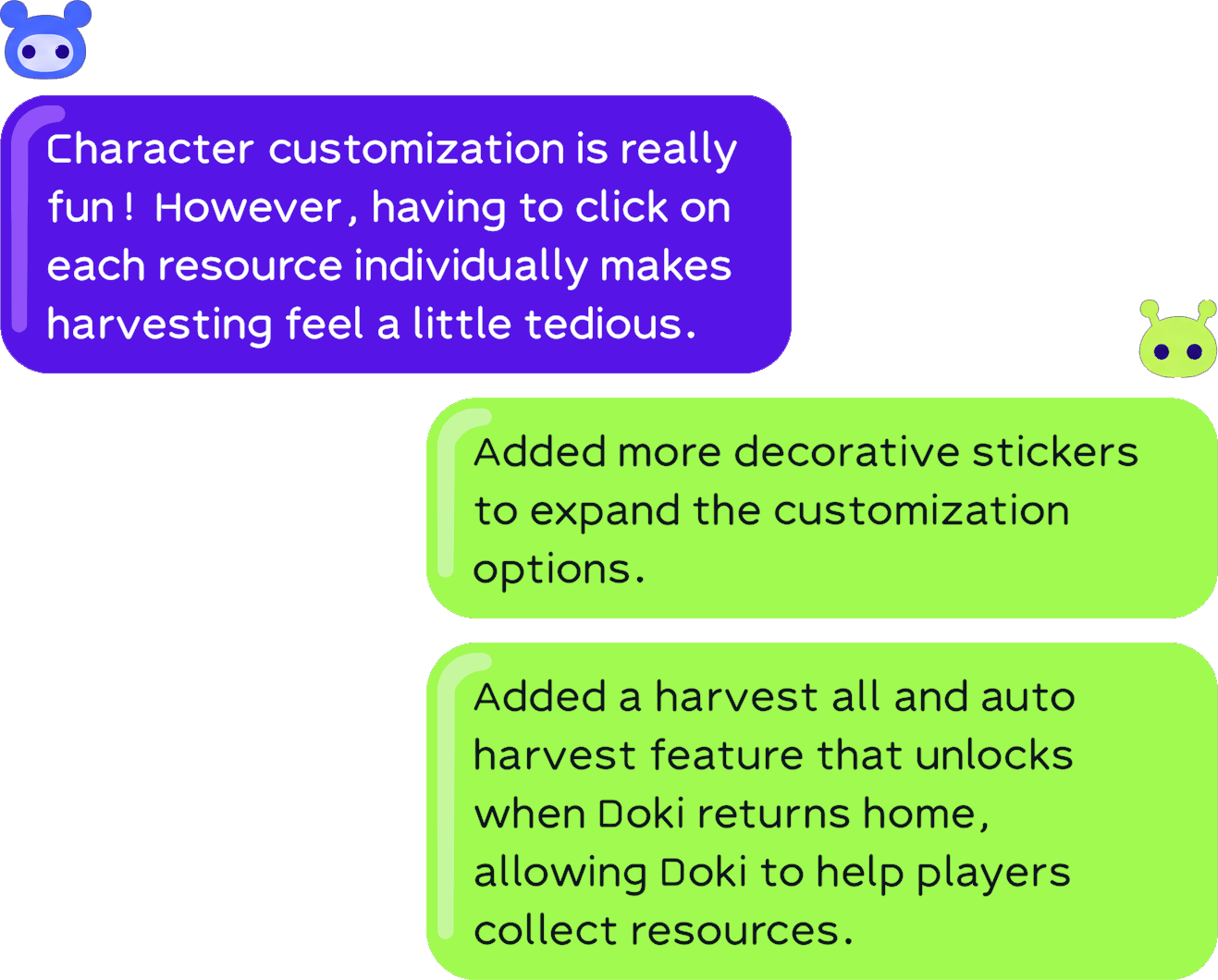
Farming is the most basic action in the game, but playtests showed that collecting crops one by one every day quickly turns into chores. Once Doki returns, a Harvest Window lets you harvest everything with one click, or switch on auto-harvest. Auto-harvest has a trade-off: you stop seeing crops grow full of fruit, so the game warns you before it is switched on, and the player chooses between convenience and the view.
-
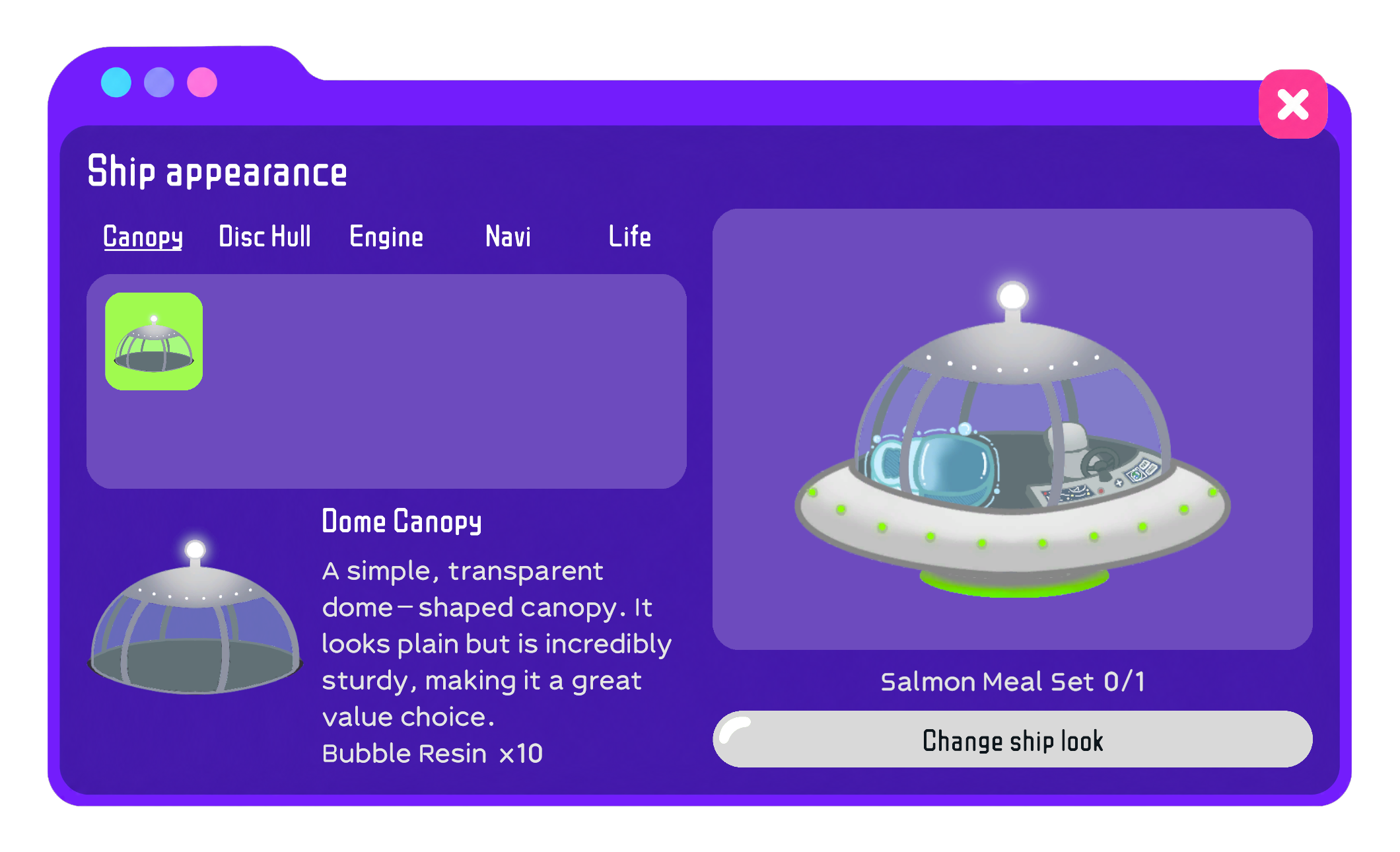
Rescues consume a lot of blueprints, but a blueprint means nothing after one use. CreCre is an engineer: she lets the player freely combine every part they own into their own spaceship. Each redesign costs one salmon meal, which links Doki's processing line to CreCre.
-
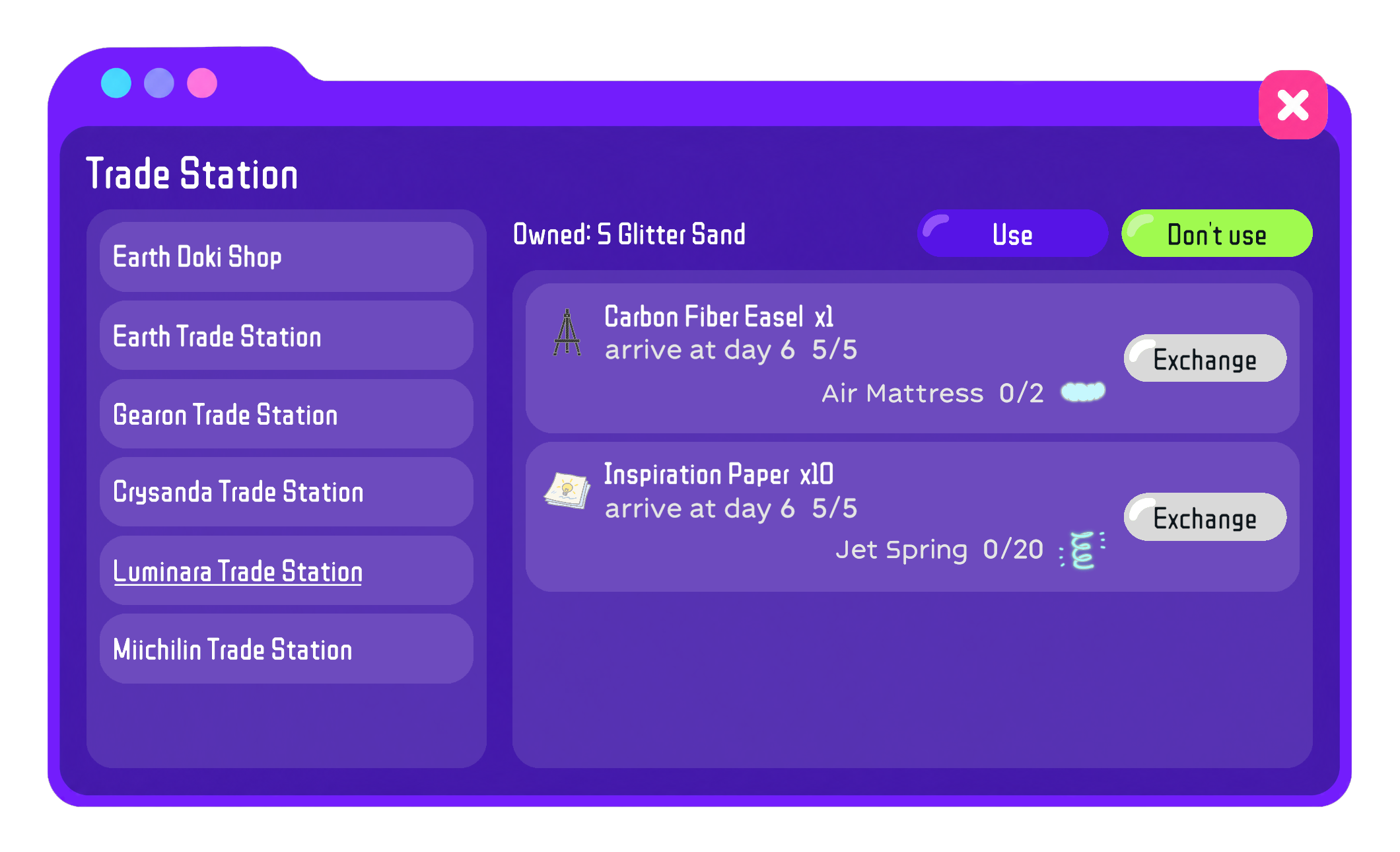
NorahS is a merchant. When she returns, the trade station will be upgraded to Level 2, and all trade stations on the planets where player previously recruited companions were located will become accessible. This aligns with her character background and naturally provides a source of basic resources.
-
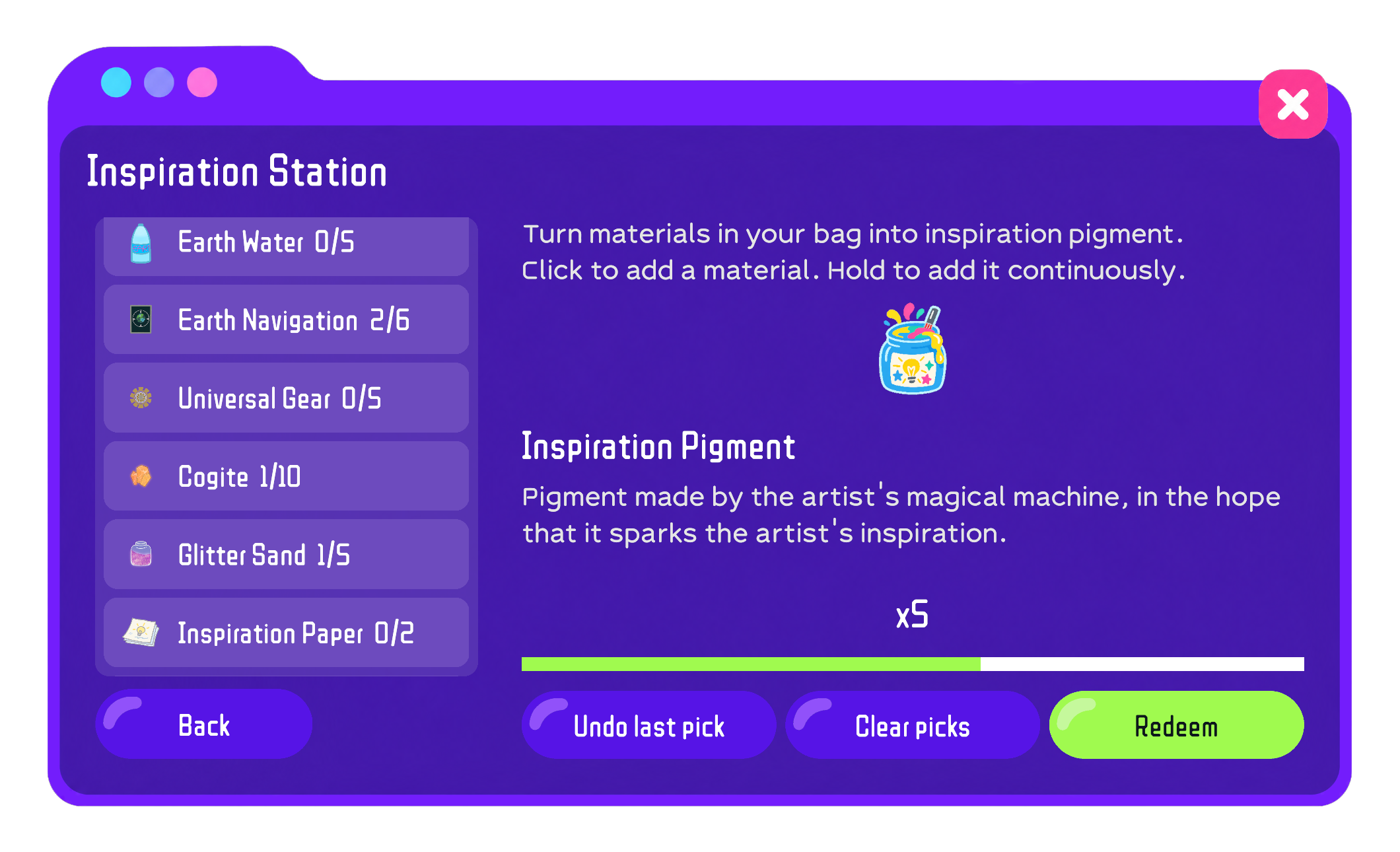
Players use the various basic resources they harvest at different rates; some items are rarely used in recipes and end up piling up in their bags. The Inspiration Station converts these unused materials and supplies into Inspiration Paint, which can then be exchanged for blueprints: spend 6 units to obtain a component that changes color based on existing components, or spend 10 units to create an entirely new component.
-
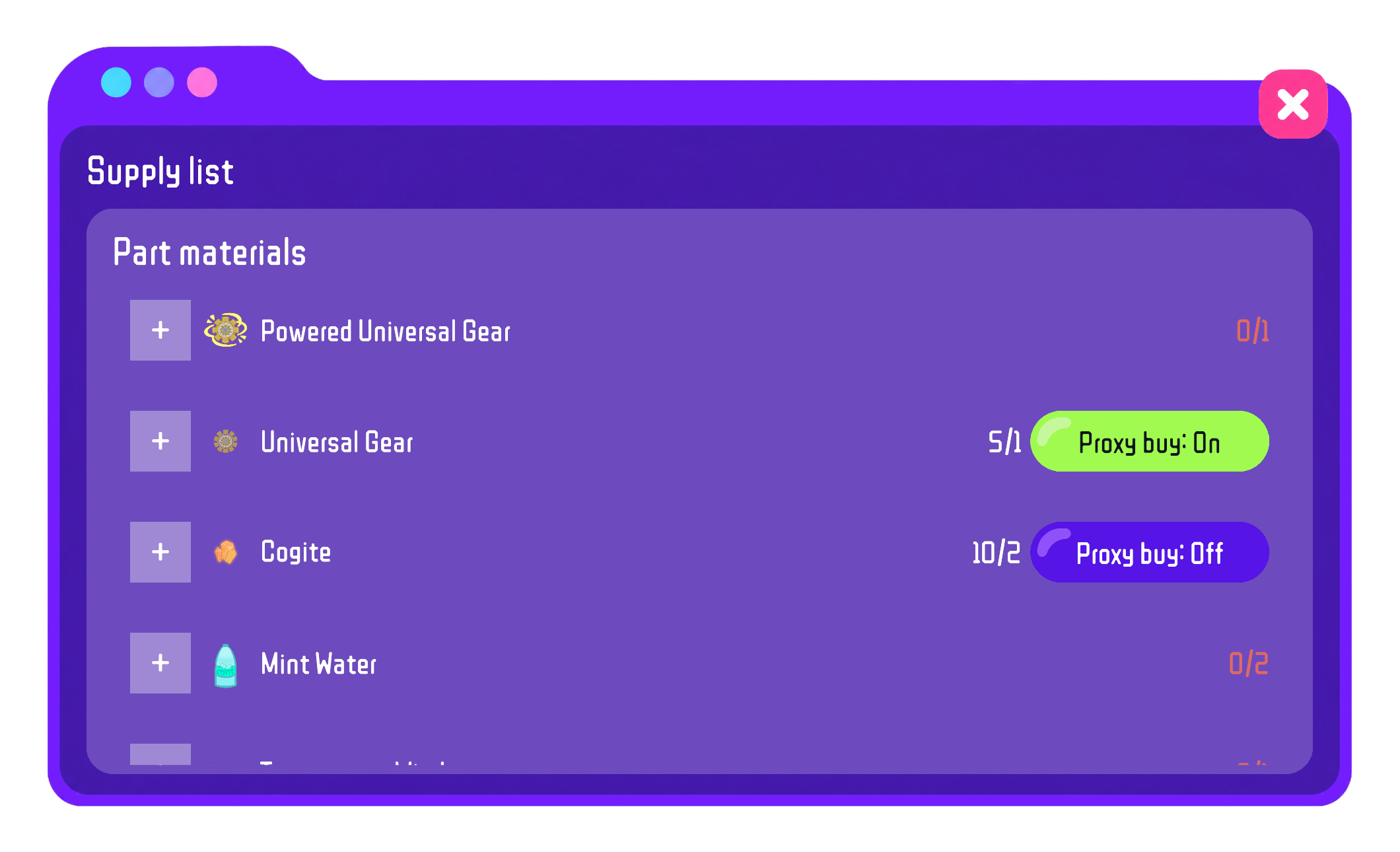
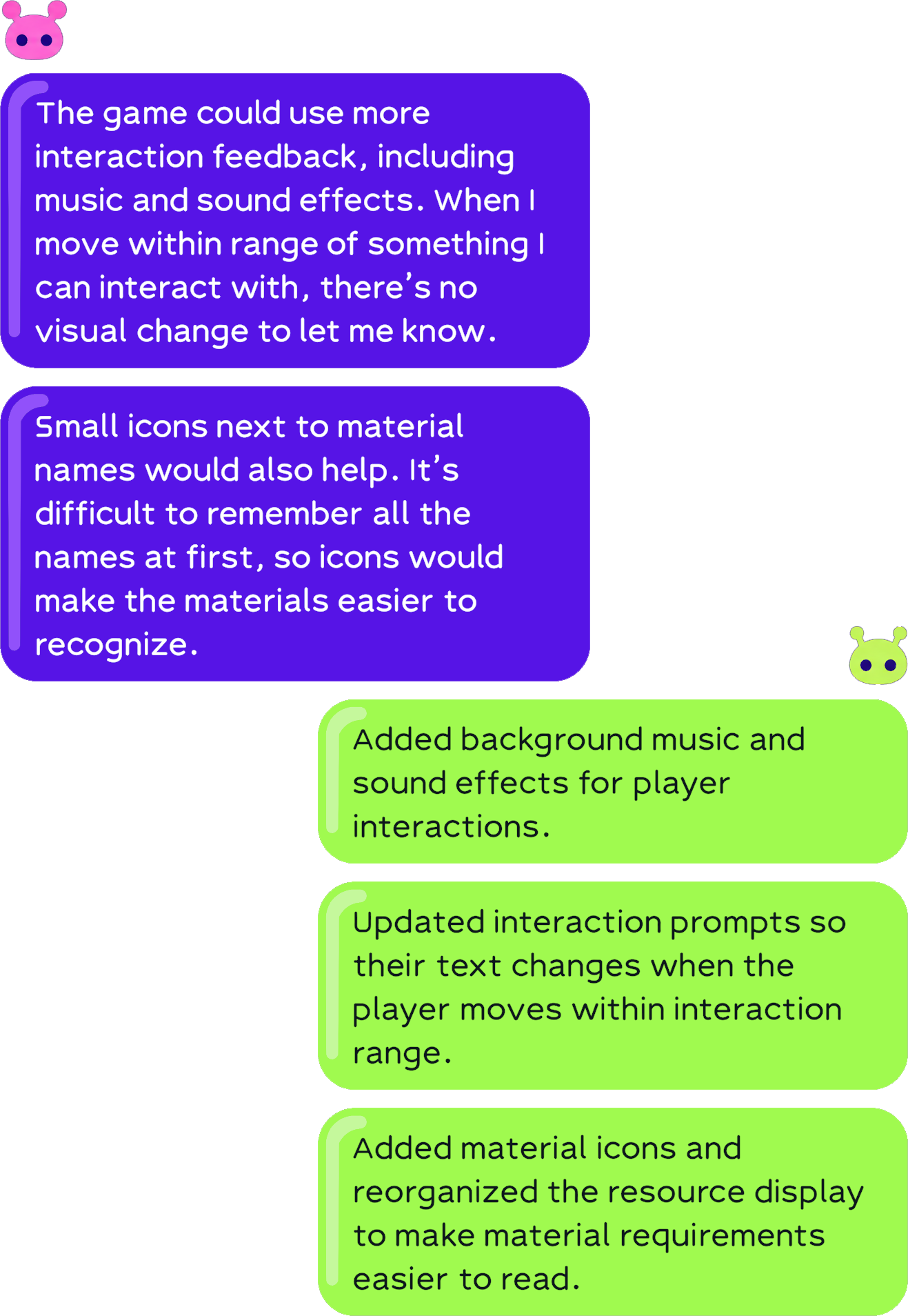
As the game progresses, the materials required for a spaceship become increasingly detailed: what components are needed, how to craft them, and where to buy them. The materials list breaks down everything needed for the current rescue mission down to the raw ingredients, compares the quantities in your inventory, and specifies the sources of any shortages; for shortages that can be purchased at trade stations, you can have MM & WW automatically buy them for you.
This follows the same logic as Doki’s automatic harvesting: delegating repetitive calculations and errands to companions, with the player deciding whether to enable the feature.
Make Your Own Alien
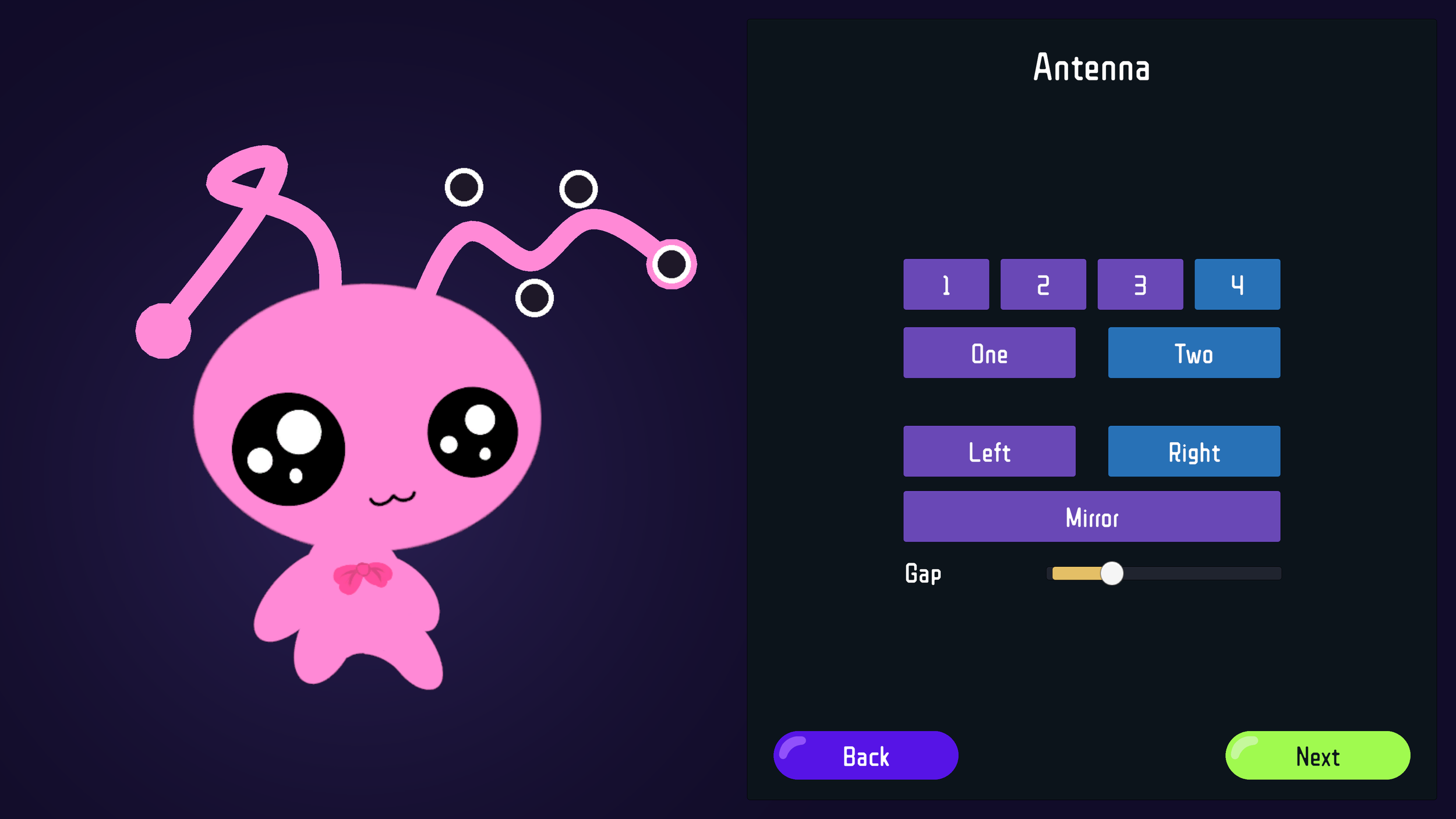
At the start of the game, players create their own alien by choosing a color, a name, and parts from five categories: body, face, eyes, mouth, and stickers. They can also freely shape one or two antennae by dragging 1–4 control points on each.
While the other features are selected from preset lists, the antennae are shaped directly by the player, adding a personal touch to each character. This was one of the most positively received features in playtesting, with players especially drawn to how cute their creations looked. Their custom alien then stays with them throughout the game, appearing both on the planet and in dialogue.






Data-Driven Design
The entire game is driven by data tables, so building the next rescue mission mainly involves editing spreadsheets.
Every item, recipe, spaceship part, building, companion, letter, dialogue line, trade offer, and so on is stored in a spreadsheet. To add a new rescue mission, simply add a row, import the data table into Unity, and then fill in any missing art assets. With the data pipeline already in place, populating the content is very straightforward.

Playtest Feedback & Design Iterations
Playtest version included:
- Three Homu companions to bring home: Doki, CreCre, and NorahS.
- Signal Spire upgrades up to Level 2.
↑ Before ↓ After
All changes can be seen in the latest demo.