PC · Unity · 1-Bit Pixel Art


You are the worker behind the arcade screen — placing apples, dealing pieces, and tossing barrels so the game can keep running.



In classic arcade games, every "spontaneous system event" — apples spawning, tetrominoes dropping, barrels rolling — was never actually automated.
Someone was doing the manual labor. You are that laborer.
You don't play the game. You keep it running.

You swap roles with the in-game AI: you become the level hazards and obstacles, while the AI acts as the player attempting to beat the game. Input is disabled on the game canvas, you can only spectate the AI.
No level select, no "game clear." Your labor is tracked instead — apples fed, pieces dealt, barrels tossed. These stats unlock nothing and cannot be reset. They serve solely as proof of labor, confirming you worked your shift.
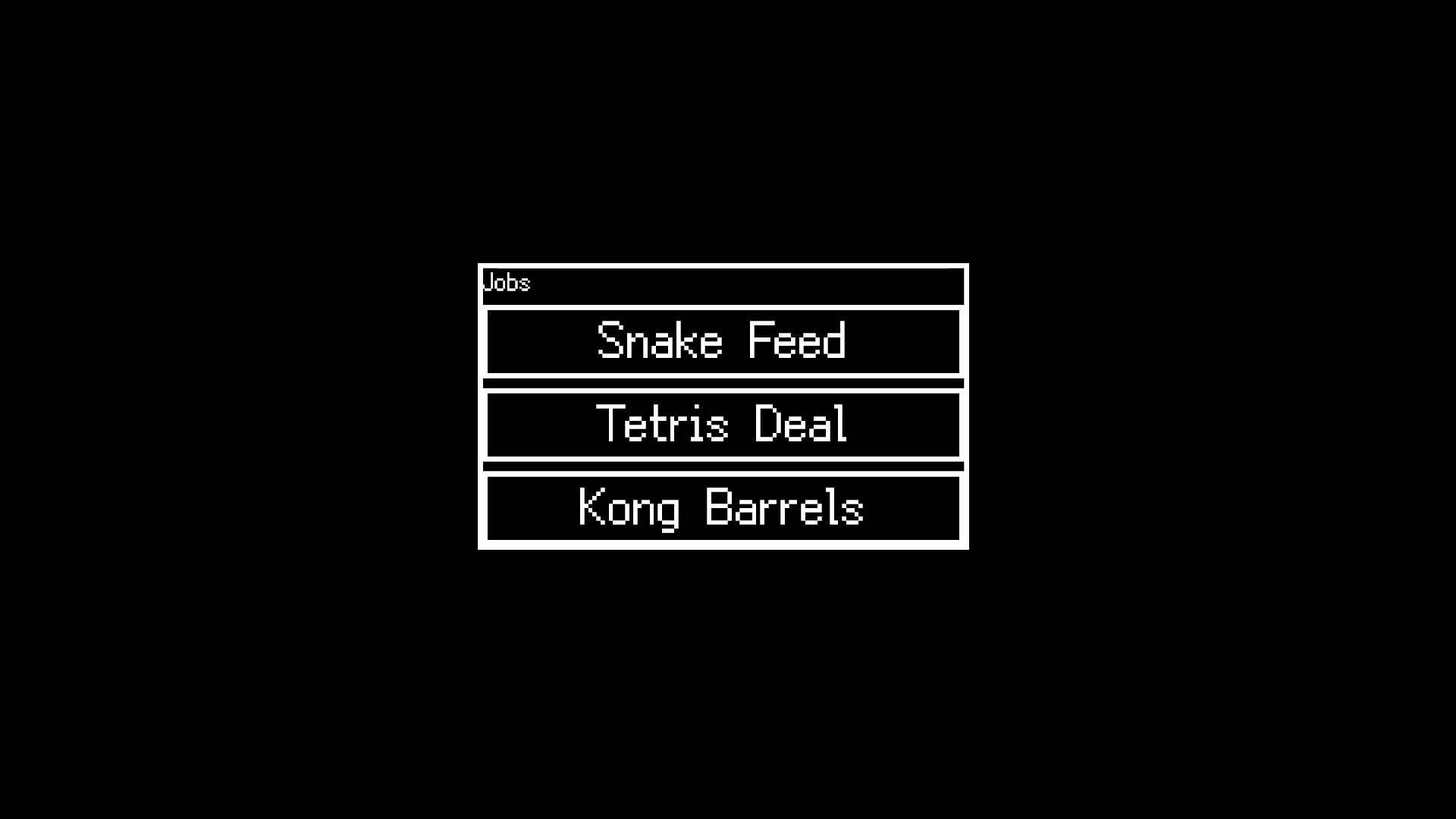
Three shifts to work. Clock in and out at any time:
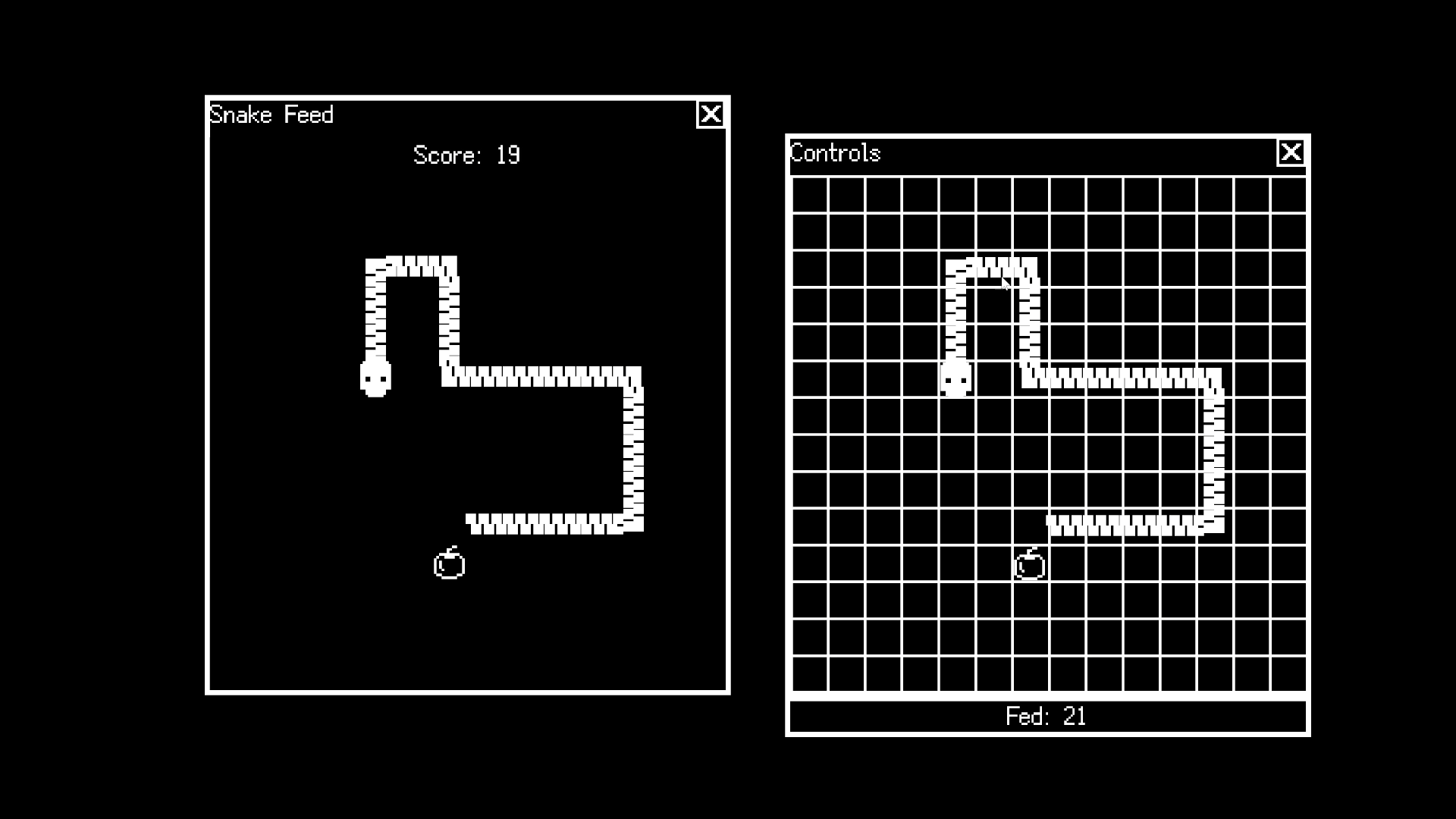
- Snake Feed — Choose where the apple spawns.
- Tetris Deal — Choose which piece appears next .
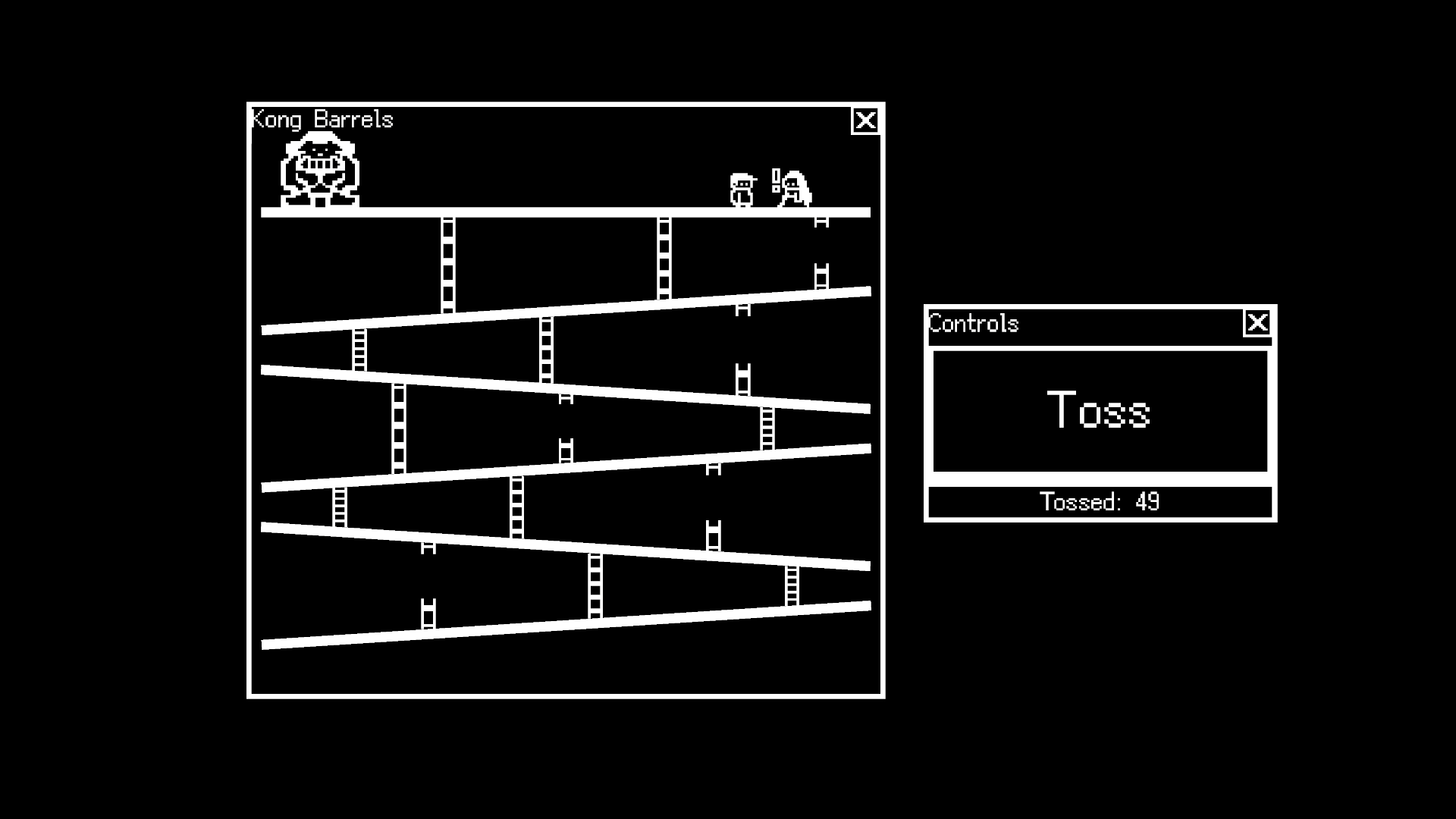
- Kong Barrels — Decide when to toss barrels down.
The Dual-Window Interface
Display Window — The game screen, as seen by the AI player.
Interactive Game Window — Your console, where you manipulate the obstacles.
In the downloadable PC version, these are real desktop windows with transparent backgrounds, floating directly on top of your desktop.


Where
Play the 'Apple Feeder' behind a classic Snake game. Your console mirrors the 14×14 playfield in real time — hover to preview, click an empty cell, and the apple instantly appears on the AI's screen.
Design intent: the snake's death should stem from tricky apple placements by the player. Every death is on you.
The three modules cover the three archetypes of system-driven obstacles: Where · What · When.

What
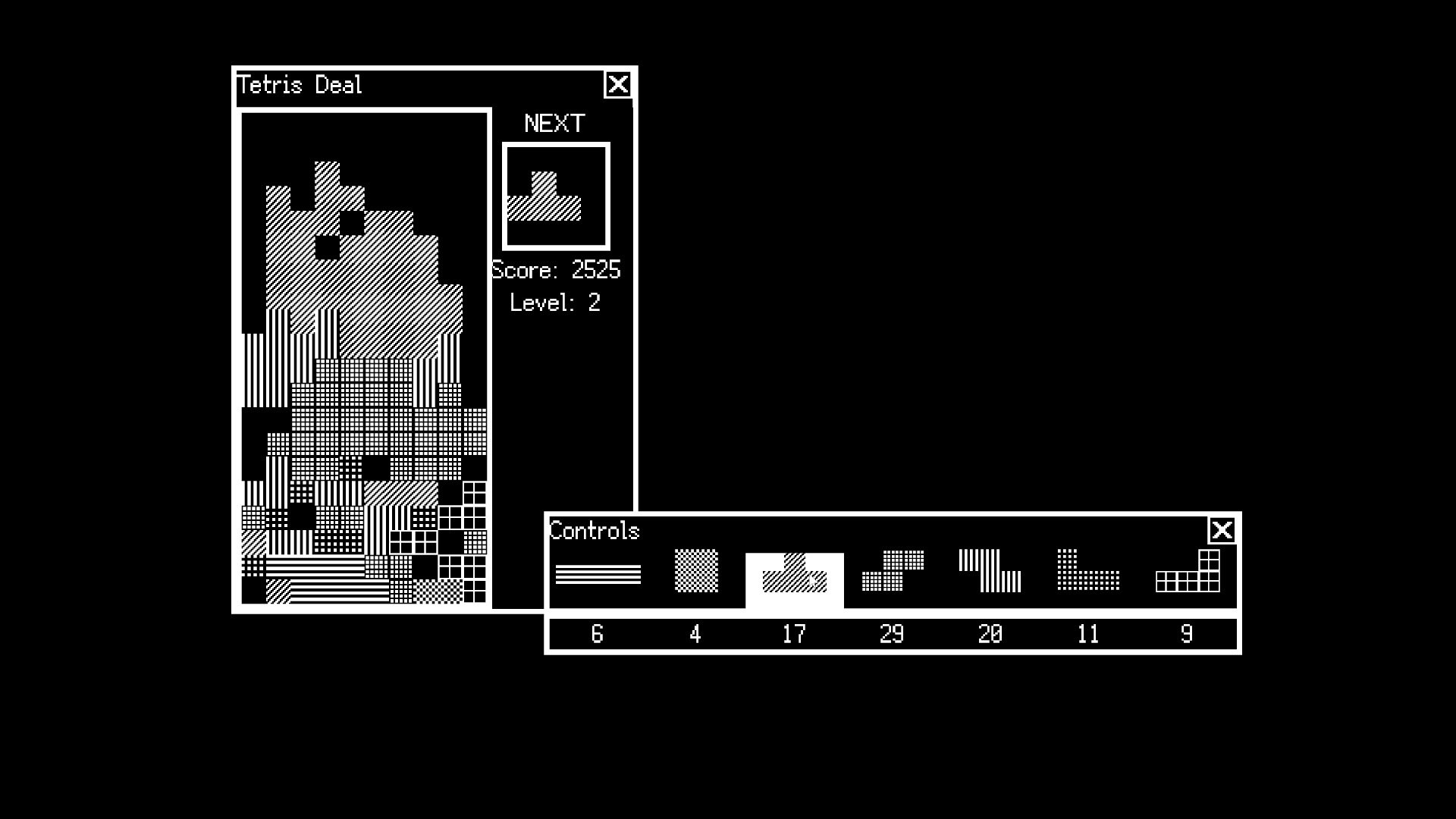
You are the Tetris dealer. For anyone who ever complained, "Why won't that long piece ever show up?!" — there is finally someone to blame.
The core mechanic is Hover-to-Select: whichever piece your cursor hovers over instantly becomes the NEXT piece — no click required. If you stay idle, the game keeps feeding the same piece without waiting.

When
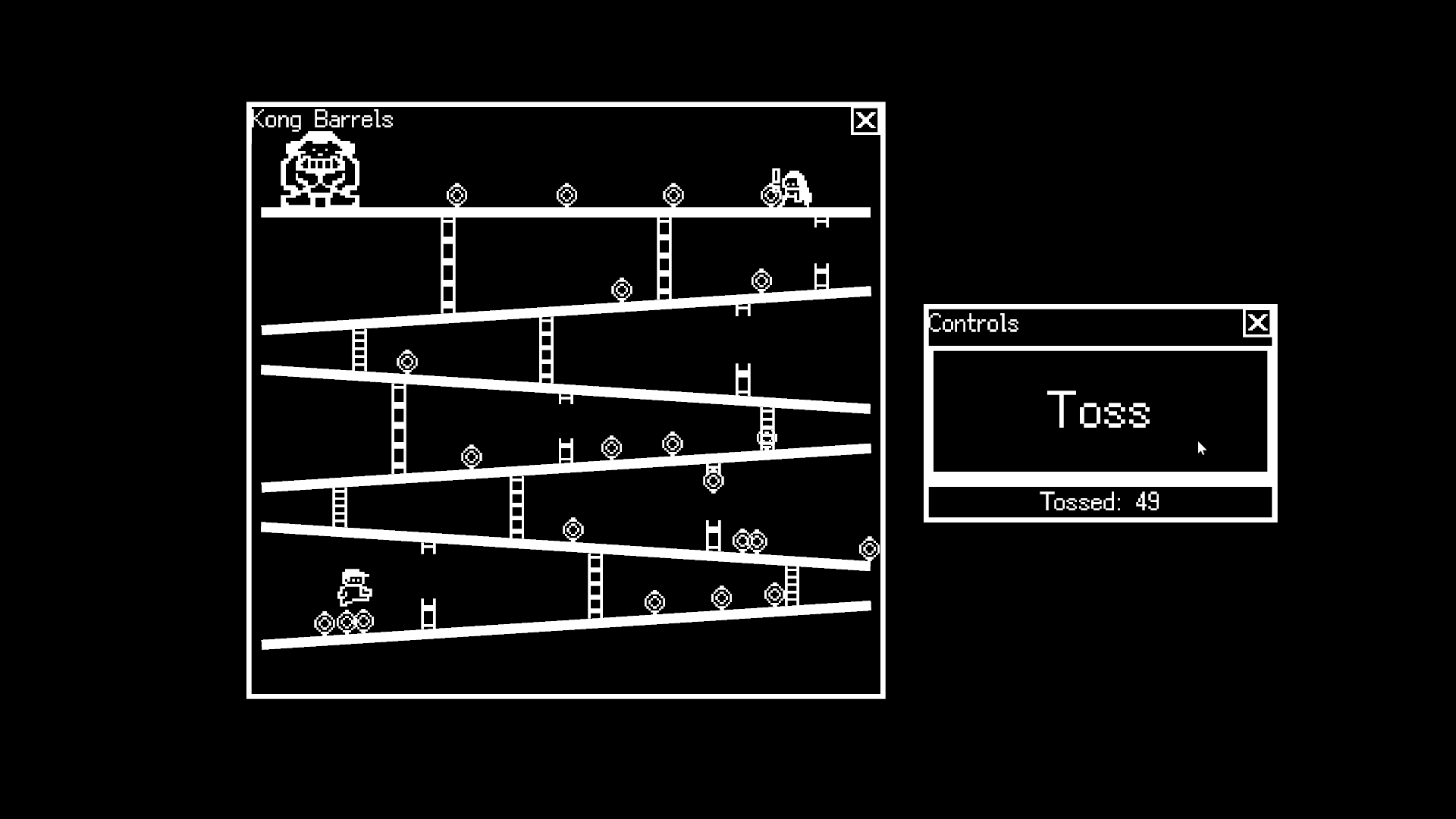
Mario tries to rescue the princess. You are Donkey Kong. Your console is one button: Toss. Press it, Kong lifts, and a barrel rolls down.
If Mario dies, he respawns while your barrels keep rolling. If he reaches the princess, the stage resets. Either way, the climb continues, and the game never end.


Sisyphus pushes the boulder up the mountain, the boulder rolls back down, and he pushes it again. Here, the boulder takes the form of: the snake dies and restarts, the blocks fill the well and restart, Mario reaches the summit, resets, and climbs again. The player's labor is recorded, but the player never reaches ultimate victory or defeat.
If a game no longer holds winning or losing, and failing merely means starting over — what kind of experience would the player truly have? Sisyphus Works invites you to embody the worker behind the screen: a perpetual, indispensable cog in an unending cycle.